
If a helical pile met its torque target, what still has to be checked at the footing bracket?
A torque record can help verify one part of a pile installation. It does not measure how much load the existing footing can deliver to the bracket. The design professional must consider the building load at that position, the existing concrete, the bracket and its connection, the pile components, and the supporting ground. A limit at any one of those points can control the repair.
Why an offset beside the wall matters
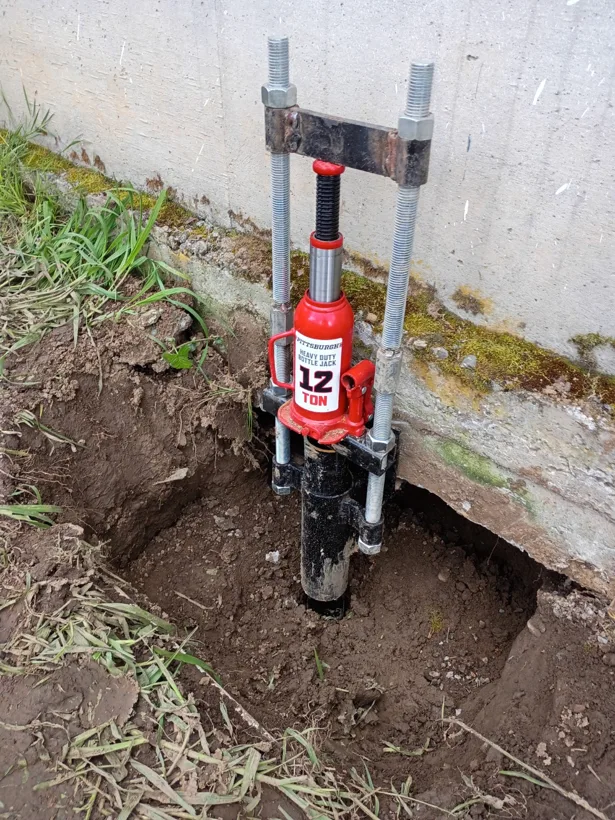
Imagine holding a loaded shopping bag close to your body, then holding the same bag farther out. The weight stays the same while the turning effect increases. A side-mounted underpinning bracket presents a similar design question: where does the footing bear on the bracket relative to the pile axis? For a given vertical force, increasing the horizontal offset increases the moment. The installed geometry and the way the assembly is restrained matter.
ICC-ES report ESR-1854 provides a product-specific example. Its bracket discussion calls for the concrete foundation design to account for eccentric loading and bracket reactions. Use the report and drawings applicable to the actual system. A capacity table copied from another bracket cannot establish the capacity of the photographed assembly or of your project. ICC-ES ESR-1854, section 4.1.1.
Which document answers which question?
| Evidence offered | What to look for | What still needs separate evidence |
|---|---|---|
| Installation log | Pile identifier, depth, torque record and comparison with the project criteria. | Condition of the receiving concrete and the final installed bracket configuration. |
| Bracket drawing or product report | The specific component, limits of use and assumptions that apply to its published ratings. | Whether the footing and actual assembly at this location meet those assumptions. |
| Pre-backfill observation record | Actual position, bracket configuration, contact with the footing, and any documented deviation. | The designer’s disposition of deviations and the permit closeout status. |
Suppose the concrete looks different once it is exposed
Consider an illustrative bid based on a sound concrete edge. Excavation reveals a broken corner at the proposed bearing location. The torque record could be identical to the one anticipated in the design while the footing detail has changed materially. Ask which location is affected, what dimensions and condition were documented, and whether the original connection detail remains applicable. A change in bracket position or a concrete repair needs a documented design decision where it alters the approved load path. A homeowner cannot decide that question from a photograph.
Ask before the excavation is covered
In Eugene, the city’s checklist specifically identifies bracket contact, pile position and inclination, component identification, and individual depth and torque readings as observation items for special inspection. The checklist also explains the residential structural-observation route and the city inspection before concealment. Ask which records apply to the property and who will provide them. Eugene helical-pile inspection checklist.
One question brings the documents together: “For the pile marked here, can you show me the approved connection detail, what was actually exposed, and how any difference was resolved?” For help comparing an Oregon underpinning proposal, share the relevant drawing and scope pages. See our underpinning services or call 541-543-8328 for a free estimate.