
What if a helical pile reaches high torque before its expected depth?
A sudden increase in turning resistance is a reason to check the installation record against the design. It could reflect a stronger layer, an obstruction or a change in how the pile advances. Whether the pile is acceptable depends on the specified system, depth, installation behavior and acceptance criteria. The highest number on the gauge cannot settle that question by itself.
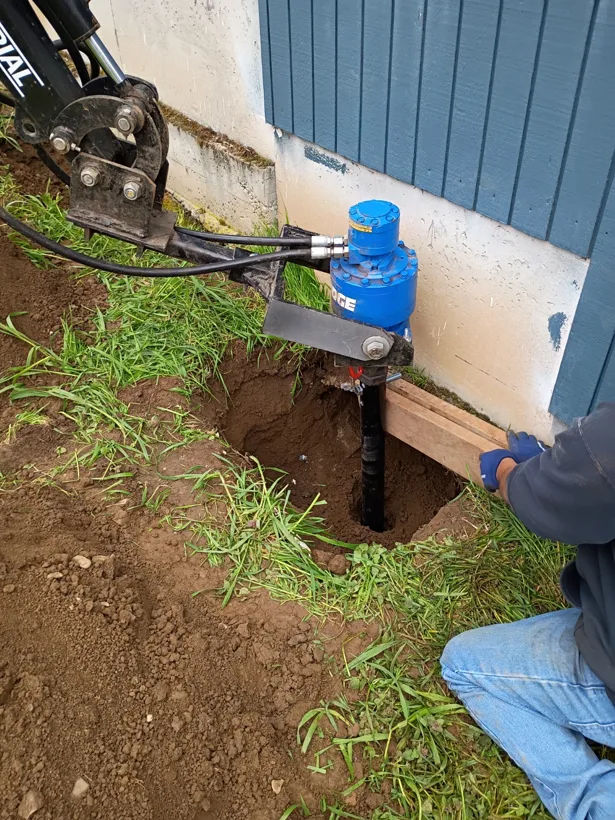
Read the depth and torque together
Installation torque describes the effort needed to rotate the shaft. In suitable conditions a system-specific relationship can help an engineer estimate axial capacity. Its interpretation depends on the pile configuration and how it penetrated the ground. A log showing increasing resistance as the pile continues to advance gives a different picture from a sharp spike followed by almost no advance. Neither trace identifies the soil or proves contact with bedrock.
Ask for the record from the individual pile position. Look for the planned and installed location, shaft and helix configuration, depth reference, measured torque at successive depths, final reading or required average, and notes on interruptions. Ask how the instrument was calibrated. A hydraulic pressure reading needs the applicable conversion for that drive equipment before anyone treats it as a torque measurement.
Three situations that sound similar on the phone
- Higher than estimated, still progressing. The estimated installation depth may have been a budgeting assumption. Compare the record with the design's minimum depth, applicable torque criteria and shaft limits.
- Unexpected stop or deflection. An obstruction can mimic a competent layer. The system documents and designer govern the response. Moving sideways changes the bracket location and the portion of footing it serves.
- Expected depth reached with too little resistance. This is a different discrepancy. The designer may need more penetration, additional investigation or a revised design. An extra length charge in a quote is a pricing provision, not a technical acceptance criterion.
Can two piles reach the same peak torque and support different loads?
Yes. Installation torque measures resistance to turning. Under specified conditions, an empirical relationship lets a designer use torque to estimate axial capacity. The coefficient depends on the pile system. The designer also checks the shaft, couplings, bracket and connection to the existing foundation. A torque-based estimate for the soil and helix cannot establish the capacity of that entire chain.
Consider two hypothetical installation sheets with the same peak reading. On the first, the shaft advanced consistently and the log shows readings over the interval specified by the design. On the second, most of the rise occurred while the shaft barely advanced. Selecting the highest number from each sheet discards the information that distinguishes them. Even a correctly calibrated sensor can accurately measure resistance under conditions where the design’s torque-to-capacity relationship does not apply.
Three checks before comparing the readings
- Compare the same quantity. Hydraulic pressure, torque, ultimate axial resistance and allowable design load are four different quantities. Ask which one appears on the sheet, with units, and which one the acceptance criterion uses. A pressure-to-torque conversion belongs to the specific drive setup.
- Compare the same interval. A momentary peak can exceed the required value even if the specified average does not. Ask for the individual readings used in the calculation, their depths and how the pile advanced during that interval.
- Match the assembly and the decision. Ask which shaft, helices, loading direction and evaluation report the designer used. If conditions fall outside that basis, request the designer’s written disposition and any additional investigation or testing they specify.
The useful homeowner question is: “Can you show me which observations qualified this pile for the calculation, and which document accepts the installed result?” Manufacturer guidance discusses the limits of the correlation, including advancement and measurement conditions. Its numerical criteria are specific to the system and application. CHANCE technical design manual.
Who signs off on the exception?
Ask for the specified response when minimum depth, installation resistance and shaft limits cannot all be met. The engineer may review neighboring logs, subsurface information, pile geometry and available test evidence. Any revised position or configuration should be documented against the final drawing. A homeowner should be able to match the exception to one pile and one written decision.
Portland publishes a determination covering geotechnical reports and special inspection, with conditions for exceptions. Eugene publishes its own helical-pile permit checklist, including a product evaluation report. Confirm the authority for the property's address, especially outside city limits. The local permit record can help identify who reviewed an installation discrepancy.
Technical references: CHANCE model specifications, installation termination and obstructions (manufacturer example; use the installed system's documents), Portland BOD 25-01, and Eugene foundation repair checklist.
Comparing Oregon proposals? Request a free estimate for helical pile installation from Home Remodel Specialist at 541-543-8328. Share the design criteria if available and ask how field changes will appear in your closeout documents.
How to read a pile log when one position stops early
Illustrative example. All identifiers and readings below are invented for this exercise. Imagine a homeowner receives two installation sheets. The drawing labels two positions P1 and P2, but the invoice gives only the total length installed. Here is the part of the two sheets the homeowner needs to compare.
| Location | Depth below stated starting elevation | Recorded installation torque | Observation |
|---|---|---|---|
| P1 | 10 ft | 1,800 ft·lbf | Shaft advancing |
| P1 | 12 ft | 2,100 ft·lbf | Shaft advancing |
| P2 | 10 ft | 1,700 ft·lbf | Shaft advancing |
| P2 | 10.2 ft | 2,800 ft·lbf | Little additional advance observed; installation paused |
The useful clue is the pairing at P2. The recorded turning resistance rose while the shaft gained little depth. The table leaves the reason open. It gives the reviewer a specific location and interval to check against the applicable plan, equipment record and neighboring logs. It supplies no design threshold, accepted pile capacity or evidence of bedrock.
What would close the record? Ask for the applicable design revision, the instrument ID and calibration reference, and the written disposition for P2. If the location or assembly changed, the final plan should let you find it again. Without the disposition, the homeowner can see where an exception occurred but cannot tell from these entries how it was resolved.
Open and print the blank helical pile installation log. Use one sheet per position and attach the observation rows and review record to the matching as-built drawing.